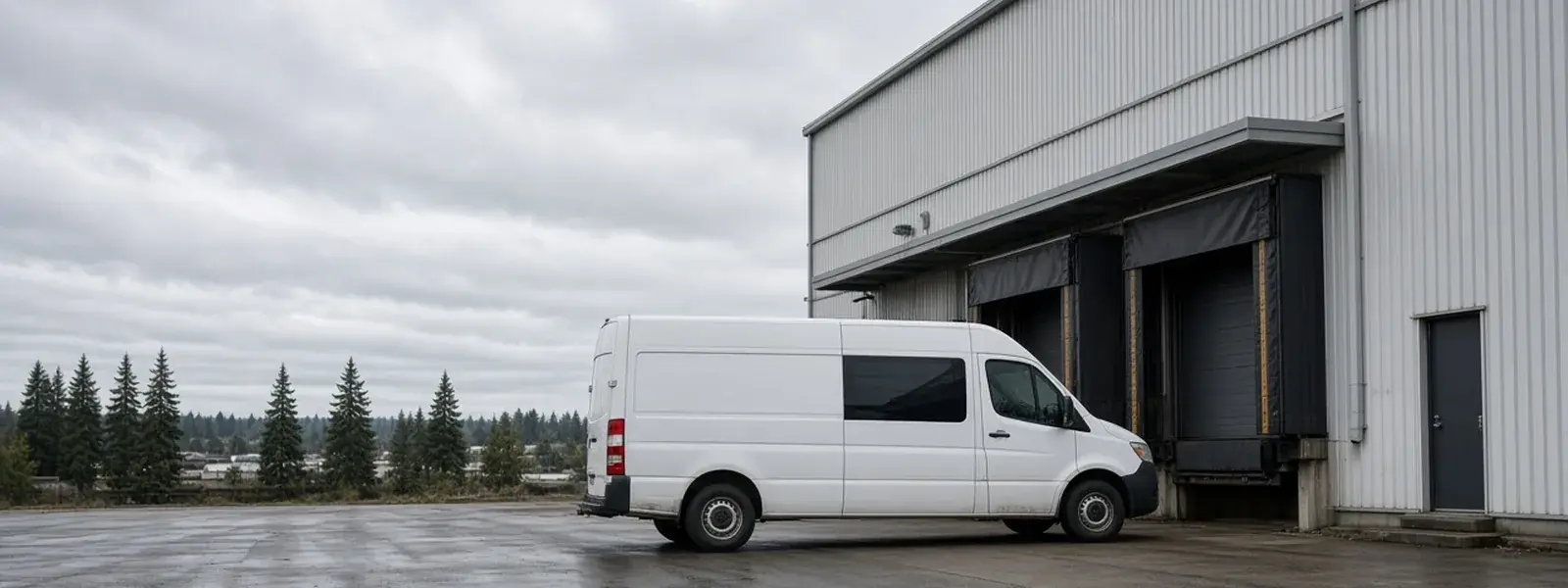
Langley Quality Commercial HVAC spends the wet season on roofs that never really dry. From Willowbrook to the 200 Street corridor, packaged rooftop units sit in Fraser Valley rain from October through March, and a lot of them fail for reasons that have nothing to do with a 'tired compressor' story. The unit still has a compressor. What it doesn't have is a cabinet that seals, an economizer that moves, or a condensate path that still reaches a drain. Wet winters here are not a Vancouver drizzle plus a little frost. They are weeks of standing water on low-slope decks, night temperatures that hover around the point where a heat exchanger sweats, and outdoor air that is wet enough to rust a linkage solid.
Langley's commercial roofs take that weather in a particular way. The Township prairie is flat. Wind comes up the Fraser and down from the north shore hills. A 10-ton package on a plaza behind 200 Street or along Fraser Highway doesn't get a rain shadow. Water ponds at the curb. It creeps under a foam gasket that should have been replaced two owners ago. It finds the supply plenum and the first stained ceiling tile in the front office. We see that pattern on 1990s retail decks around Willowbrook and on older shop roofs toward 196 Street. The building looks dry from the parking lot. The curb is sitting in a puddle.
Cabinet corrosion is the failure people walk past. Paint chalks. Fasteners seize. The access panel that should come off in two minutes takes a grinder because every screw is rusted into the liner. Inside the gas section, the burner compartment ingests wet outdoor air through a cracked cabinet seam or a missing screw. The inducer pulls that air across a heat exchanger that is already cycling hard on a winter morning. Rust starts at the seam, not in the middle of the cell. By the time a tech sees a crack on a combustion test, the unit has been short-cycling through a wet heat exchanger for a couple of seasons. That is a Langley winter problem. Inland, dry-cold markets crack exchangers from overheating. We crack them from moisture plus short-cycling.
Economizers take the same rain and turn it into a controls problem. Mixed-air dampers on a packaged RTU are supposed to pull free cooling when the outdoor air is cold and the space still needs it. In a Fraser Valley winter that should be most of the day, at least for a stocked retail floor. What we find is a damper seized shut, an enthalpy sensor that has been wet since November, or a linkage that someone wired open after the last complaint. A damper stuck closed means the compressor or the gas heat does all the work on days it should be loafing. A damper stuck open means the space floods with 4 degree air and the heat exchanger never shuts off. Either way the tenant calls it a 'bad unit.' It is a wet economizer.
Condensate is the quiet winter leak. Cooling season gets the blame for overflow, but Langley packages make water in winter too. Gas heat produces condensate in high-efficiency equipment, and even a standard rooftop will sweat a coil when a morning is wet and the blower is pulling 8 degree air across a warm return. Algae grows in the pan during the shoulder months. The trap dries on a cold week, then the next mild, wet day the pan fills and the float switch kills the unit, or worse, there is no float switch and the water goes into the deck. We follow stains from the curb inward. A lot of 'roof leaks' on Fraser Highway plazas are RTU condensate with no home.
Gas heat on these packages has its own winter script. Igniters fail. Flame sensors soot up because the burner is pulling damp, dirty air. Pressure switches lock out when the condensate in the collector box doesn't drain. The inducer motor bearings take that wet air all season and start to growl in January. None of that is exotic. It is what happens when a rooftop furnace section lives in rain instead of in a mechanical room. Langley also has a lot of units that were never given a proper combustion test after a tenant improvement. Manifold pressure is off. The heat exchanger runs rich or lean. Wet winters expose that faster because the unit fires longer and the exhaust is cooler.
The local building stock makes it worse. Willowbrook and the 200 Street retail decks are multi-unit roofs with packages that were set during a reno and never commissioned as a group. External static pressure is high because someone added a filter rack and a couple of tight take-offs. The blower is already on the wrong speed tap. Add a wet winter, a dirty coil, and a glazed belt, and the unit ices or overheats depending on the week. Toward Gloucester and the 196 Street industrial belt the office RTU is a small curb on a huge warehouse roof. Nobody walks out there after November. The first visit in March is a seized outdoor fan and a pan full of sludge.
Surrey sees the same weather on the other side of 192 Street. Port Kells warehouses and the Fraser Highway industrial grid sit in the same rain cell as northwest Langley. If your office package is failing in Port Kells, it is not a different climate. It is the same wet-winter pattern with more truck grit on the coil. We treat those Surrey roofs as cousins of the Langley ones: curb gasket, economizer, condensate, then the gas section. Rooftop unit repair on this side of the Fraser starts there, not with a compressor guess.
A real rooftop visit in this weather has a sequence. We look at the curb and the membrane before we open the cabinet. We check the pan, the trap, and the float. We free or test the economizer and read mixed-air temperature, not just the thermostat. We check belt tension, blower amp draw, and external static against the fan table. On the gas side we look at ignition, flame signal, inducer amp draw, and a combustion reading when the heat exchanger is in play. On the cooling side, even in winter, we still care about charge if the unit is trying to run, because a low charge that was ignored in August becomes a winter short-cycle when the coil is wet and the airflow is already wrong.
Curb leaks deserve their own paragraph because they get blamed on the roofer and the HVAC tech in equal measure. A packaged unit sits on a curb. The gasket between them is foam or a sealant bead. Fraser Valley rain finds every gap. If the supply and return openings were never flashed right, the leak is inside the building even when the roof membrane is fine. We have pulled units on 200 Street and found the original wood curb rotten under a cabinet that looked only 'a bit rusty.' That is not a capacitor. That is a wet-winter building problem that happens to show up as an HVAC call. Repair might be a gasket and new flashing. It might be a curb rebuild before anyone talks about a new package.
People ask when to keep repairing and when to stop. We don't run a calendar or a promise on that. We look at heat-exchanger condition, cabinet integrity, compressor health, and whether the curb is still a curb. A unit with a sound heat exchanger, a cabinet you can still seal, and a coil that will clean can keep working. A unit with a cracked exchanger, a rotten curb, and an economizer that has been seized since the last lease is a different conversation. Wet winters accelerate all of those. They don't invent a rule that every 15-year-old RTU must come off in March.
If your Langley package is locking out, leaking into the ceiling, or blowing cold on a wet week, the useful move is a rooftop unit repair visit that treats rain as the environment, not as background. Langley Quality Commercial HVAC works those curbs all winter, including the Port Kells and Fraser Highway roofs that share the same weather. Call with the building, the unit location, and what the thermostat is doing. We'll tell you what we're actually going to open.